
Healthcare Specialist/Paramedic Certificate
Jumpstart your career with our Healthcare Specialist/Paramedic Certificate program. Gain certifications and practical skills for fire and healthcare roles.
About the Healthcare Specialist/Paramedic Certificate
- Gain a broad education in the principles and practical applications of emergency medical services (EMS) and healthcare.
- Earn required state and national certifications that support employment in EMS agencies, healthcare facilities, fire departments, governmental agencies, and other organizations focused on emergency response and patient care.
- The certificate is your stepping stone to working in diverse roles within fire and healthcare agencies and similar occupations.
- Complete the program in just three semesters of full-time academic work, following the completion of the prerequisite course BIOL 1314.
Healthcare Specialist/Paramedic Certificate Details
Explore the Healthcare Specialist/Paramedic Certificate program. Develop essential patient care and emergency response skills, earn valuable certifications, and prepare for careers in EMS and healthcare.
After successfully completing this program, you will have the ability to:
- Integrate the principles of history taking and techniques of physical exam to perform a comprehensive patient assessment.
- Demonstrate the ability to integrate knowledge, skills, and professional behavior to successfully manage all aspects of a trauma and medical emergencies as a team leader.
- Advocate for all patients including those with physical, mental, social and financial challenges.
- Demonstrate the ability to effectively communicate both through the written and oral medium as well as demonstrating interpersonal communication skills.
- Integrate pathophysiological principles and the assessment findings to formulate a field impression and implement a treatment plan.
- Defend and advocate the need for a culture of safety.
View the Certificate Requirements to find out which courses and credits you'll need to earn your certificate.
Explore the Program Map to see how you can complete your certificate.
Procedures for Application
- Review School of Health Sciences Policies & Procedures
- Review the Estimated Cost of the Program
- Apply for Admission to TCC
- Contact a School of Health Sciences Academic Advisor
- Apply to the Program before the June 1 deadline.
Note: Requires current National Registry of Emergency Medical Technician certification.
The TCC Healthcare Specialist/Paramedic Program does not conduct applicant interviews. Admission decisions are based solely on the Total Academic Points earned and the program's established selection criteria (Applicant Scoring Rubric). Applicants will be notified of their admission status through their TCC email.
We're here to help you succeed. Contact us at emsparamedic@tulsacc.edu for more information.
CAAHEP Accredited Paramedic Programs track and report outcome measures annually to the Committee of Accreditation for the Emergency Medical Services Professions (CoAEMSP).
| Outcomes | 2022 | 2023 | 2024 |
|---|---|---|---|
| Psychomotor Exam – Passed on first attempt | 100% | 100% | 100% |
| Cognitive Exam Pass Rate | 100% | 88% | 100% |
| Positive Job Placement | 100% | 100% | 100% |
| Student Retention | 90% | 94% | 77% |
Program Minimum Expectations
To prepare Paramedics who are competent in the cognitive (knowledge), psychomotor (skills), and affective (behavior) learning domains to enter the profession.
General Qualifications
To qualify for certification/licensure as an EMT or Paramedic, an individual must successfully complete a state-approved course and meet all National Registry of Emergency Medical Technicians (NREMT) certification requirements and Oklahoma state licensure requirements applicable to their level of certification.
Emergency Medical Service personnel must have the:
- Ability to communicate verbally via telephone and radio equipment.
- Ability to lift, carry and balance up to 125lbs (250lbs with assistance).
- Ability to interpret written, oral and diagnostic form instructions.
- Ability to use good judgment and remain calm in high-stress situations.
- Ability to work effectively in an environment with loud noises and flashing lights.
- Ability to function efficiently throughout an entire work shift (common are 12,16, and 24 hour shifts).
- Ability to calculate weight and volume ratios and read small print, both under life-threatening time constraints.
- Ability to read and understand the English language.
- Ability to accurately discern street signs and address numbers from a distance.
- Ability to interview patients, family members and bystanders.
- Ability to document, in writing, all relevant information in the prescribed format in light of the legal ramifications of such.
- Ability to converse in English with coworkers and hospital staff as to the status of the patient.
- EMS personnel should possess good manual dexterity, with the ability to perform all essential tasks related to providing the highest patient care. Ability to bend, stoop, and crawl on uneven surfaces and varied environmental conditions such as extreme heat, cold and moisture is vital. The ability to work in low light, confined spaces and other potentially dangerous environments is required.
Essential Functions
- Receives radio calls from dispatchers, responds in the appropriate manner. Able to read and comprehend maps, may be required to operate the ambulance appropriately, navigate to the scene safely, observing all traffic laws and ordinances applicable to ambulance operations.
- Determines the nature and extent of the patient’s injury and/or illness. Obtains the patient’s vital signs, observes the patient’s skin color, auscultates the patient’s breath sounds, makes determinations regarding the patient’s status and establishes the priority of patient care and most appropriate destination. May administer appropriate medications and treatments based on level of certification/licensure and scope of practice.
- May utilize equipment, based on certification level, such as the cardiac monitor/defibrillator, AED, ventilator/CPAP/BiPAP machine, endotracheal intubation of a patient and ventilation by manual or mechanized means, establish access to the patient’s circulatory system by IV/IO, package and stabilize a trauma patient for transportation.
- Assist with lifting, carrying and transporting the patient to the ambulance and then on to the receiving facility.
- Reassures the patient, family members and bystanders, avoids mishandling the patient and harmful haste, and searches for patient medical identifications that may aid patient care.
- May perform extrication of the patient from entrapment, assess the extent of injury, use accepted techniques and appliances to render aid. Communicates with appropriate agencies to request additional assistance or specialized services. May perform simple, non-technical rescue if safe to do so.
- Complies with all statutes and regulations regarding the disposition of the deceased, notifies the proper authorities, and arranges for protection of property and evidence at suspected crime scenes.
- Determines the most appropriate facility to receive the patient, reports that nature of the illness or mechanism of injury and pertinent information to the receiving facility prior to arrival and performs any tasks requested of medical control prior to arrival if able.
- Observes the patient’s status enroute to the hospital and continues to administer appropriate medical care until the patient is transferred to the care of the receiving facility.
- Identify pertinent diagnostic signs from the patient and relay those to the receiving hospital.
- Safely move the patient from the ambulance to the assigned room/area and communicates with the receiving staff about the patient verbally and then prepares a written report about the call.
- Maintains constant familiarity with all EMS equipment utilized by the service.
- Appropriately clean and sanitize any reusable equipment, replace disposable supplies, returns the apparatus to a “ready” state, available for the next response, as soon as possible.
- Maintains the ambulance in a serviceable condition. Ensures that the ambulance is fueled, and has adequate tire pressure, safety equipment and all lights and equipment are properly functioning.
Being a provider of emergency medical services poses inherent occupational risks for EMS responders.
Risks include the following:
- Violence/assaults
- Verbal threats/aggression
- Motor vehicle crashes
- Infectious disease
- Lifting injuries
- Sprains and strains
- Psychological trauma
- Hazardous chemical exposure
- Hyper/hypothermia
The TCC Paramedic Program is accredited by the Commission on Accreditation of Allied Health Education Programs upon the recommendation of the Committee on Accreditation of Educational Programs for the Emergency Medical Services Professions (CoAEMSP).
Commission on Accreditation of Allied Health Education Programs
25400 US Highway 19 N., Suite 158
Clearwater, FL 33763
727-210-2350
CAAHEP website
To contact CoAEMSP:
8301 Lakeview Parkway Suite 111-312
Rowlett, TX 75088
214-703-8445 Fax 214-703-8992
CoAEMSP website
Program Contact
Program Director
Larry Brewer
918-595-4748
EMS & Paramedic Program
918-595-4746
emsparamedic@tulsacc.edu
School of Health Sciences
TCC Northeast Campus
3727 East Apache Street
Tulsa, OK 74115
918-595-7002
healthsciences@tulsacc.edu
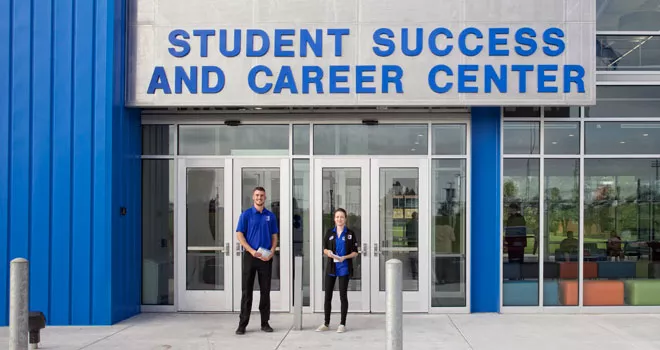
Careers in Healthcare Specialist/Paramedic
Don't miss out on the opportunity to connect with our Career Services professionals. Schedule a session now to explore the comprehensive range of complimentary resources available for career planning and job preparation.