
TCC Students, Faculty Experience Route 66 Up Close
Published
Field of Study
HistoryAbout 30 Tulsa Community College students, faculty and community members traveled Route 66 from Tulsa to Arcadia, stopping at historic landmarks and learning from experts along the way.
For many Tulsans, Route 66 has always been nearby but never fully explored.
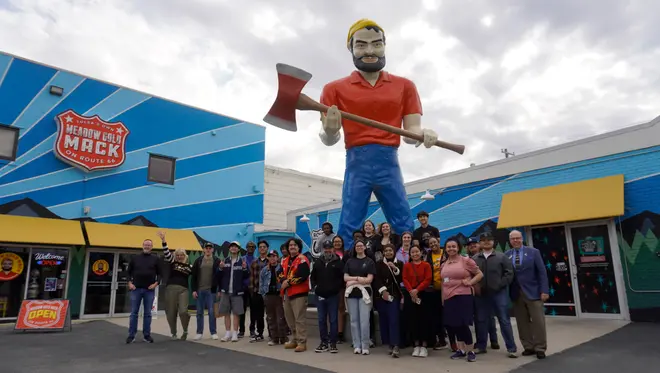
In March, about 30 students, faculty, and community members spent a full day traveling Route 66 from Tulsa to Arcadia, stopping at landmarks and meeting people who keep the historic highway alive.
“Surprisingly, even though I lived here in Oklahoma for 6 years, I had never really been on Route 66,” says TCC student Trevor Breeden. “I’ve traveled I-44 and I-40, and I just never knew it was there.”
Doug Price, TCC Director of Faculty Development and Global Learning, spearheads the trips and says this outing marked the return of the experience following the COVID-19 pandemic. He says the purpose of the trip is three-fold.
“The purpose is to experience the Mother Road through the lens of ‘road as text’, to foster community through the travelers and with those along the road who own and operate various businesses, and to foster intercultural and interpersonal exchange among the travelers,” says Price.
An initial trip took a small group of students west to Pops 66 Soda Ranch in Arcadia, followed by another that explored Route 66 east of Tulsa. This most recent trip returned west, expanding the experience into a full-day journey toward Arcadia.
With transportation funded by the TCC Foundation, the group was able to explore the route at no cost, guided by Route 66 experts including Ken Busby, Executive Director and CEO of the Route 66 Alliance and Rhys Martin, President of the Oklahoma Route 66 Association.
Throughout the trip, the experts provided context between stops, sharing stories about the road’s history, preservation efforts, and the people who continue to shape it.
“They made it really fun to just sit there and listen,” says Breeden. “It was so informative, and the way they shared information, sometimes mixed with jokes, made it really easy to stay engaged the entire trip.”
People Behind the Places
The group began the day on Route 66 at TCC’s Center for Creativity before making stops at Cyrus Avery Centennial Plaza, Route 66 Historical Village, and Meadow Gold Mack’s Route 66 Outpost in Tulsa. From there, the group traveled west to the Heart of Route 66 Auto Museum in Sapulpa, the Rock Café in Stroud, the Threatt Filling Station near Luther, and the Round Barn and Pops in Arcadia, with lunch at the Chicken Shack.
Breeden says the experience was shaped less by the destinations themselves, and more by the people they engaged with.
“Talking to Dawn Welch at the Rock Cafe and hearing the history and her connection to it added a lot of emotion and made me want to help keep a place like that alive,” says Breeden. “The Round Barn was the same way. Hearing how it had been rebuilt and what it takes to maintain it made you realize how much work goes into preserving these places.”
Student John Alves explained the audio anomaly that brings visitors to the Round Barn.
“You can have a conversation with someone across the room, and it feels like they’re standing right next to you,” says Alves.
He recently moved from California to Tulsa and says the connection people have to Route 66 stands out.
“In California, we had things that mattered to us, but something like Route 66 — and even Tulsa in general — people just really love it here. There’s a real sense of pride behind it,” says Alves. “People here take a lot of pride in where they are, and I’ve had so many random conversations that I never would have had anywhere else. Just getting to learn who people are here and what matters to them is really exciting.”
Learning Outside the Classroom
TCC Assistant Professor Jake Cornwell, who teaches a section on Route 66 in his History courses, accompanied students on the road trip and says it was an opportunity to educate up close and personal.
“I was really encouraged by the trip and being able to see so many students really connect to it,” Cornwell says. “A lot of the things I take for granted, like knowing about the Rock Cafe for 30 years and understanding that Cars is loosely based on the owner’s story, were completely new to them.”
Before joining TCC, Cornwell was a historian focused on the history of baseball in Oklahoma and 20th-century leisure culture, including amusement parks, music and counterculture. Prior to academia, he worked for years building custom hot rods and lowriders, a career that took him across the country.
“While I was a hot rodder, I was really enamored with the history of Route 66. It’s part of my family’s lineage,” explains Cornwell. “I remember my grandma telling me that old 66 used to be so busy that if you went to the grocery store, you’d have to drive into the other town to be able to turn around ... there were that many cars.”
Cornwell says he was most excited to visit the Threatt Filling Station, which is listed on the National Register of Historic Places. The station was the only known Black American-owned and operated gas station and cafe that served as a safe place for Black travelers during the Jim Crow era.
“It speaks to the presence of African Americans on Route 66, which isn’t covered much. It’s located between two sundown towns, which adds another layer to that history,” says Cornwell.
Route 66 Then and Now
Beyond individual stops, the trip offered a broader look at what has been lost along the historic highway.
“You used to go to these different places and see wild architecture and how each region was represented. Northern Illinois looks completely different from the Southwest, even though they’re on the same road. When those places go away, we lose that personality,” describes Cornwell.
“We also lose human interaction. Route 66 had stoplights along the road, which forced travelers to pause along their journeys. At gas stations, curio stands, and roadside diners. And that’s what the interstate bypassed. We lose knowing who those mom-and-pop places were. Like old time general stores and bespoke motor courts. I’m just old enough to remember that, where you could stop at a bait shop, have the world’s best chocolate cake, or see something like the world’s biggest rubber band ball.”
Alves and Breeden agree the road trip changed how they see Route 66 and want to bring friends and family to their favorite stops.
“I’ll be taking my family at some point. I might take my mom on Mother’s Day because the Rock Cafe makes great beignets. She learned how to make them in Louisiana and they were delicious,” says Alves.
“Now that I’ve been on Route 66 and seen what’s out there, and knowing the centennial is happening, it makes me want to go back and take my wife to experience more of it,” Breeden says. “They talked about how these places are disappearing every day, and they’re not going to be here forever, so I’d rather see them now.”
As Oklahoma prepares to celebrate the Route 66 centennial, Cornwell says the milestone offers a timely opportunity for more people to experience the Mother Road and better understand its impact.
“We’re going to have people from all over the world coming to Tulsa, and this is a big moment,” Cornwell says. “There will be events, music, cruises, and a celebration of a road that shaped how people traveled and influenced popular and car culture. Everything comes together to make Route 66 feel like a mobile museum. It also brings in a new generation of people and gives them a reason to learn more about the road's history.”
Route 66 Road Trip Spring 2026
TCC students, faculty, and Tulsa community members traveled Route 66 from Tulsa to Arcadia, stopping at destinations like the Rock Café, Threatt Filling Station, and Round Barn while exploring the history and culture connected to the road.
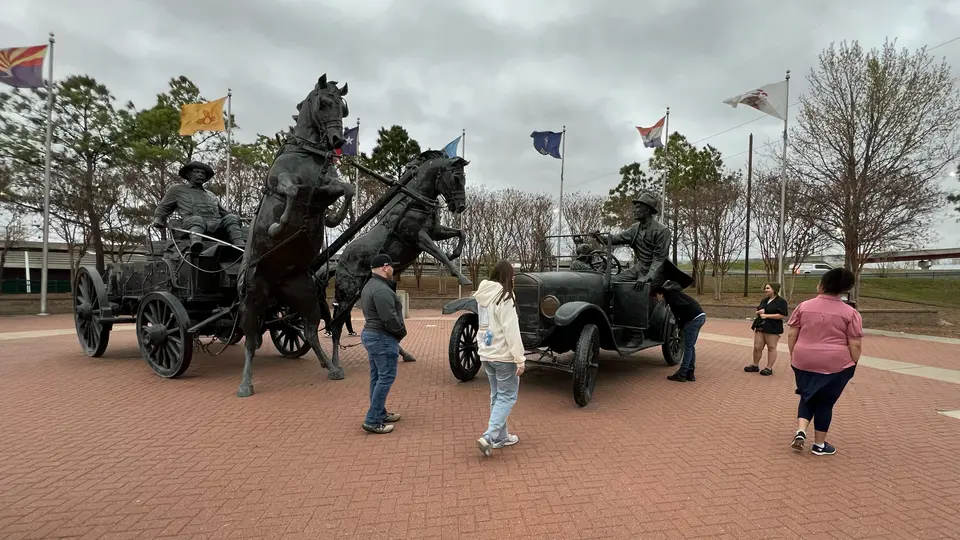
Cyrus Avery Centennial Plaza (courtesy Jake Cornwell)
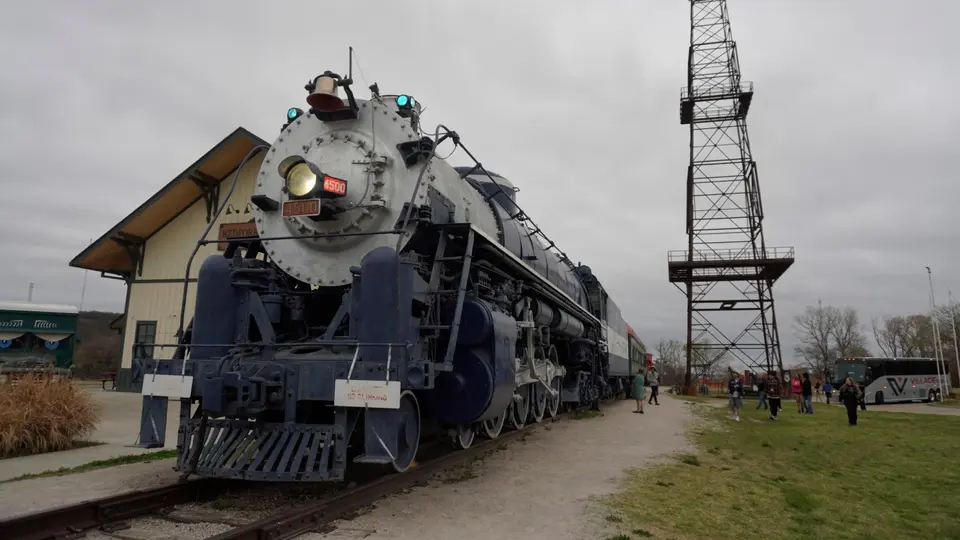
Route 66 Historical Village (courtesy Sam Levrault)
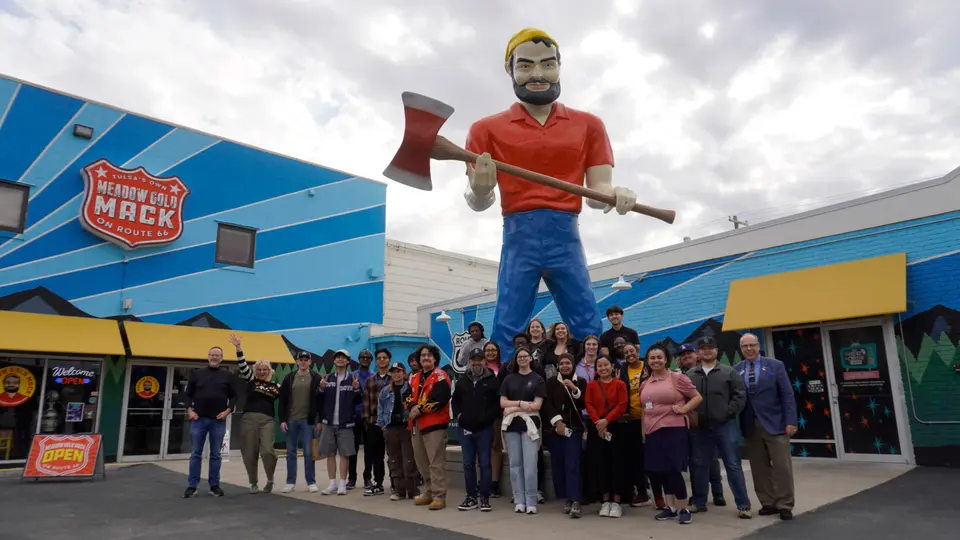
Meadow Gold Mack's Route 66 Outpost (courtesy Sam Levrault)
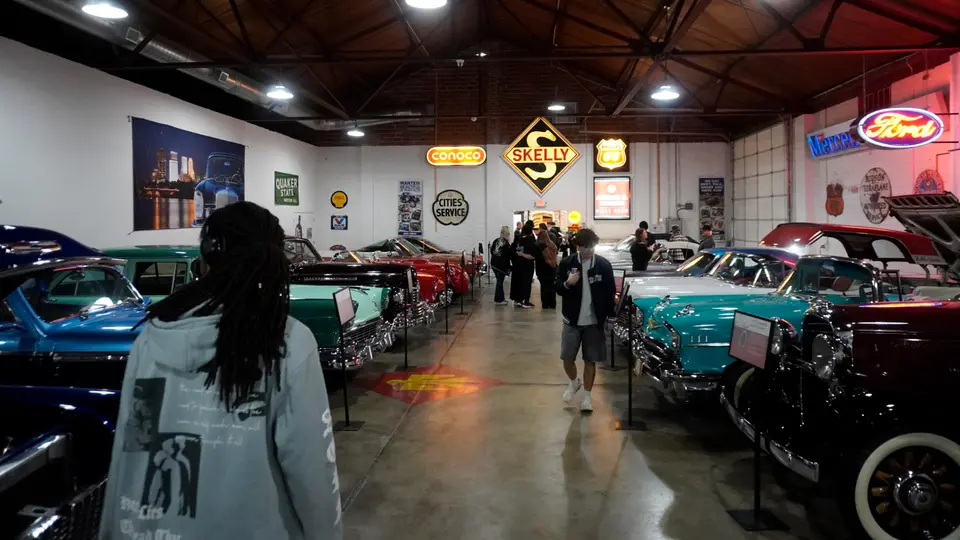
Route 66 Auto Museum in Sapulpa (courtesy Sam Levrault)
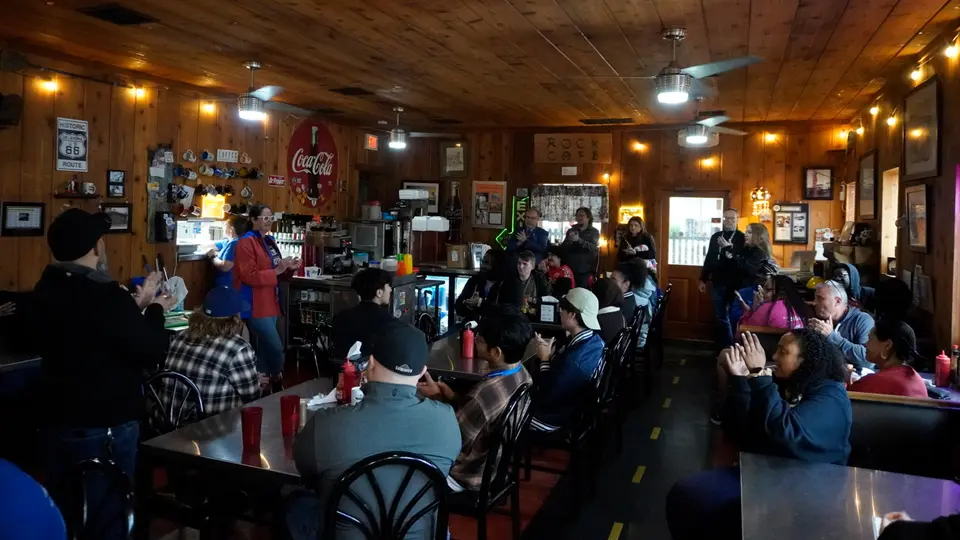
Rock Cafe in Stroud (courtesy Sam Levrault)
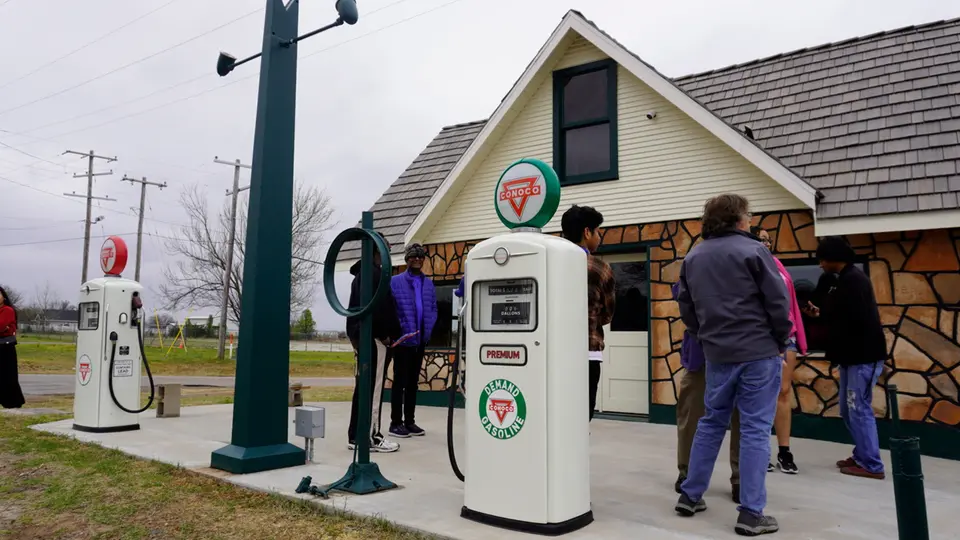
Threatt Filling Station near Luther (courtesy Sam Levrault)
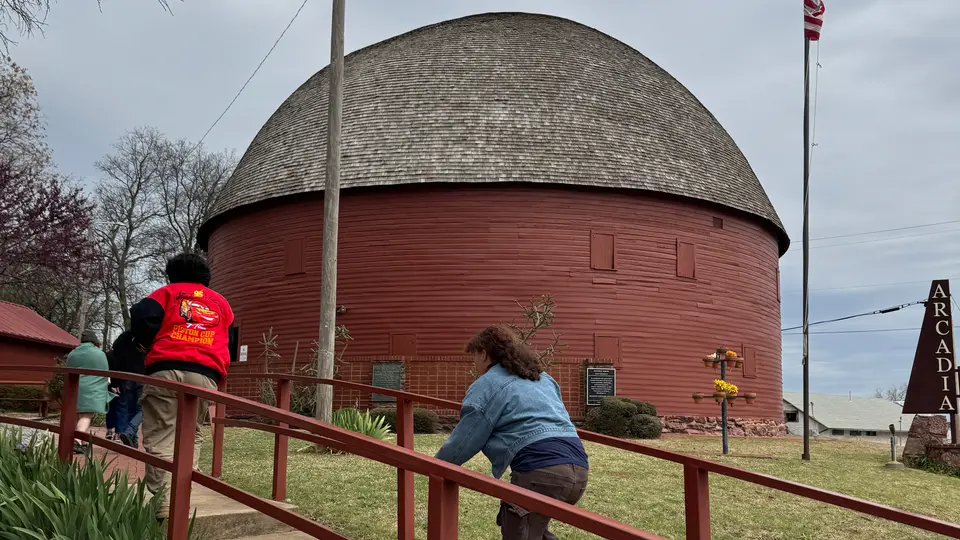
Round Barn in Arcadia (courtesy John Alves)
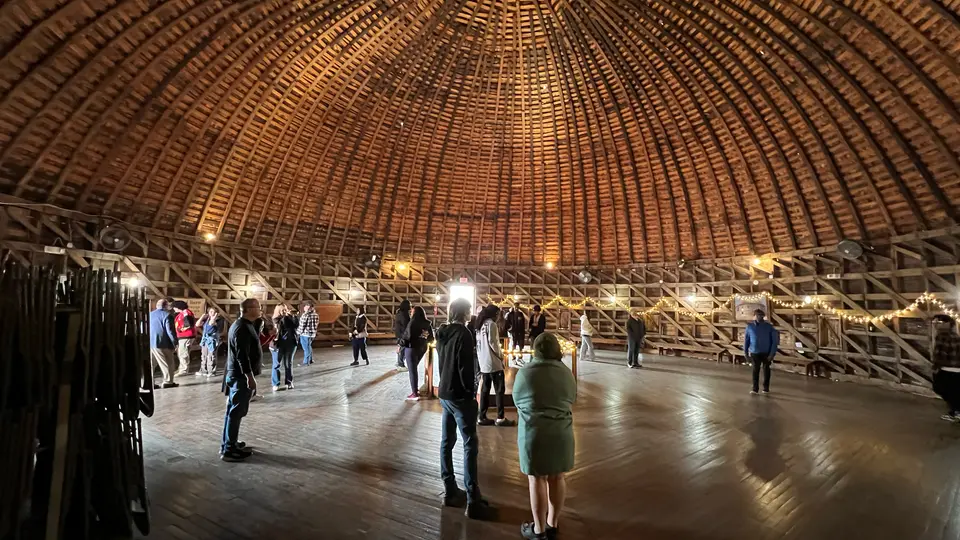
Round Barn in Arcadia (courtesy Jake Cornwell)
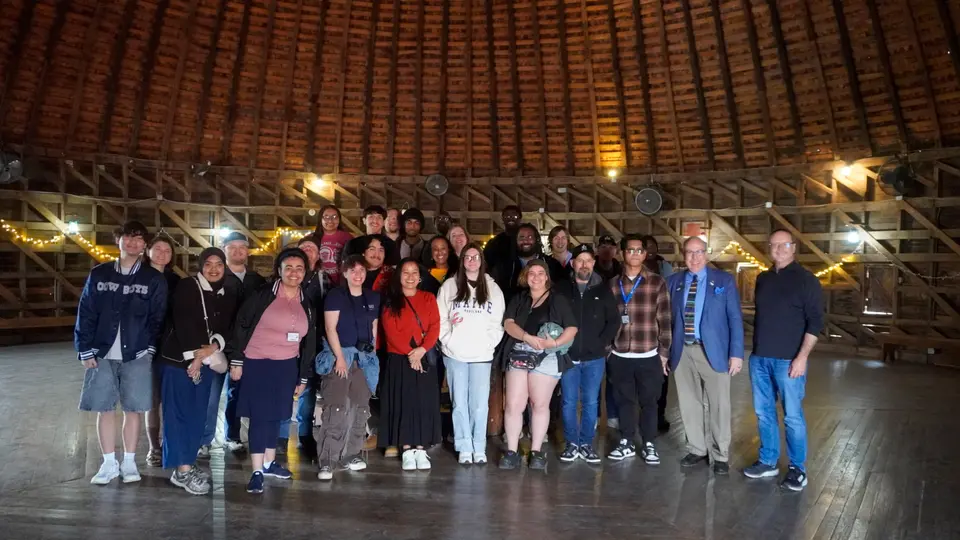
Round Barn in Arcadia (courtesy Sam Levrault)
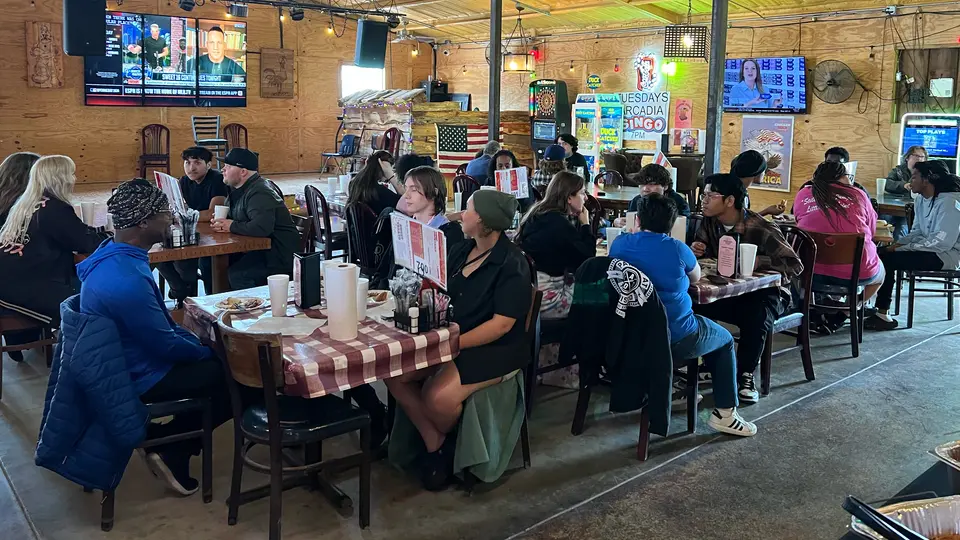
Chicken Shack in Arcadia (courtesy Jake Cornwell)
Related News
Alum Builds Theatre Career Behind Curtain
TCC alumna Moriah Jestus turned her passion for scenic design into professional experience through TCC’s Theatre program. Now, just two years after graduating, she is joining the international tour of "Kinky Boots."
TCC Student Makes History as Youngest Pilot at 2026 Albuquerque Balloon Fiesta
Professional Pilot student Baylor Rodden continues a family tradition while preparing for a career in aviation.
TCC Dual Credit Program First in State to Earn National Accreditation
Tulsa Community College’s Dual Credit program is the first in Oklahoma to earn accreditation from the National Alliance of Concurrent Enrollment Partnerships. TCC is one of only 136 programs nationwide to receive the distinction, which recognizes concurrent enrollment programs that meet national standards for quality and rigor.